sale6@hgqyplastic.com



10 Best CPET Trays for Food Packaging in 2026
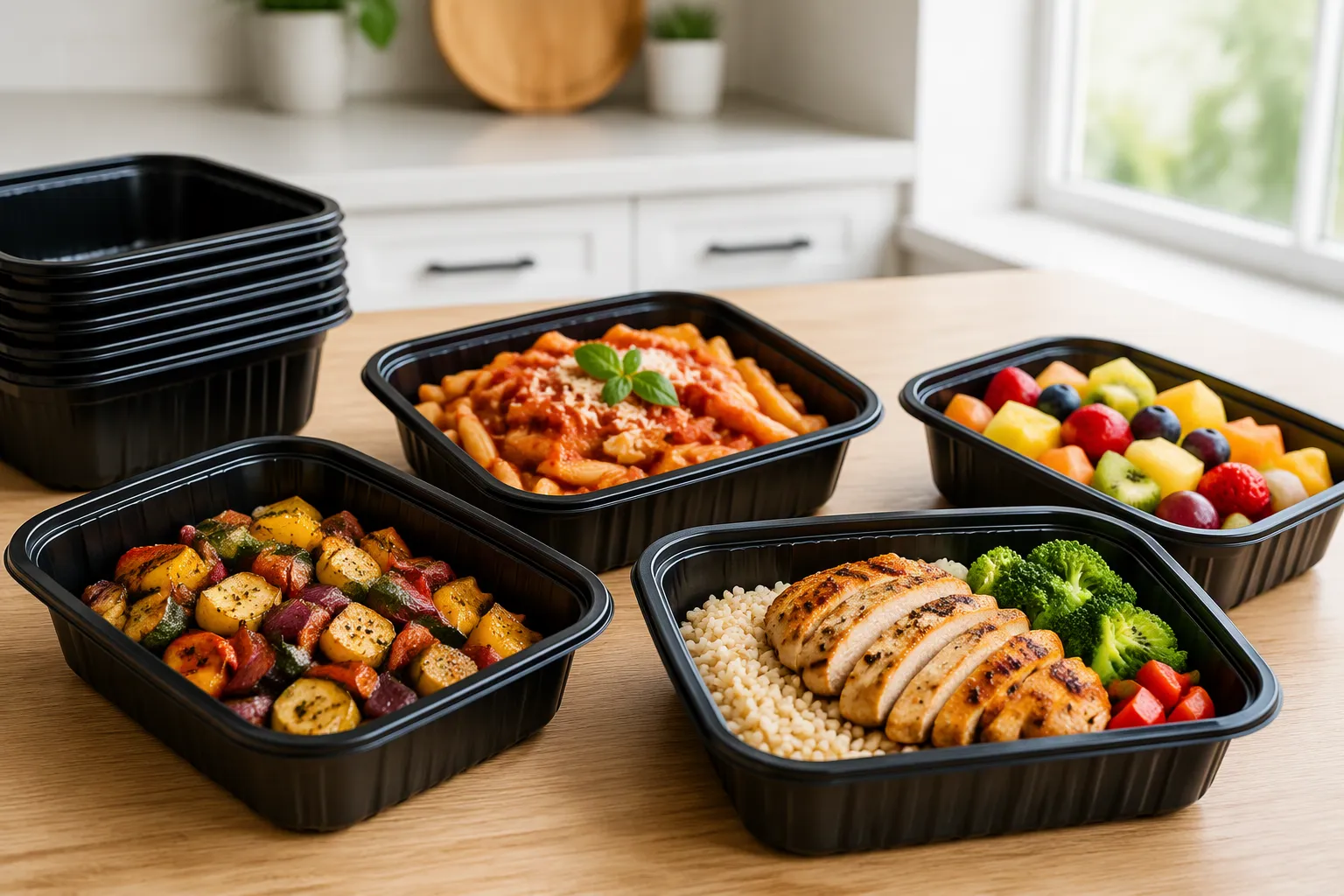
CPET trays are dual-ovenable: the same tray goes from freezer to conventional oven to microwave without a container change, and that single property drives most of the screening in food packaging. Choosing among them comes down to four filters, namely oven and microwave performance, compartment configuration, food-contact compliance, and cost per unit.
The ten formats below are ranked on those four filters, each mapped to the application it fits best. Entries 2 to 10 describe tray configurations rather than single branded SKUs, so each one maps to a mold a supplier can quote against. Every entry states material, compartment options, heat performance, compliance status, and tooling availability, which is enough to shortlist in one pass instead of requesting ten sample kits.
Key Takeaways
Dual-ovenable CPET construction lets a meal move from freezer to conventional oven to microwave without a container change.
Compartment count is a menu decision, not a cost decision: one for simple dishes, two or three to keep protein and sides separate.
Compliance is a documentation question. Ask for migration test reports and a food-contact declaration covering the tray, the lidding film, and any seal adhesive, and start by vetting the supplier rather than the sample.
Custom molds buy differentiation, standard molds buy speed. Confirm tooling lead time and mold cost before committing to a design.
Test samples through your real reheat cycle, then compare landed cost per unit rather than price per tray.
CPET Tray Formats at a Glance
Comparison Table of the 10 Formats
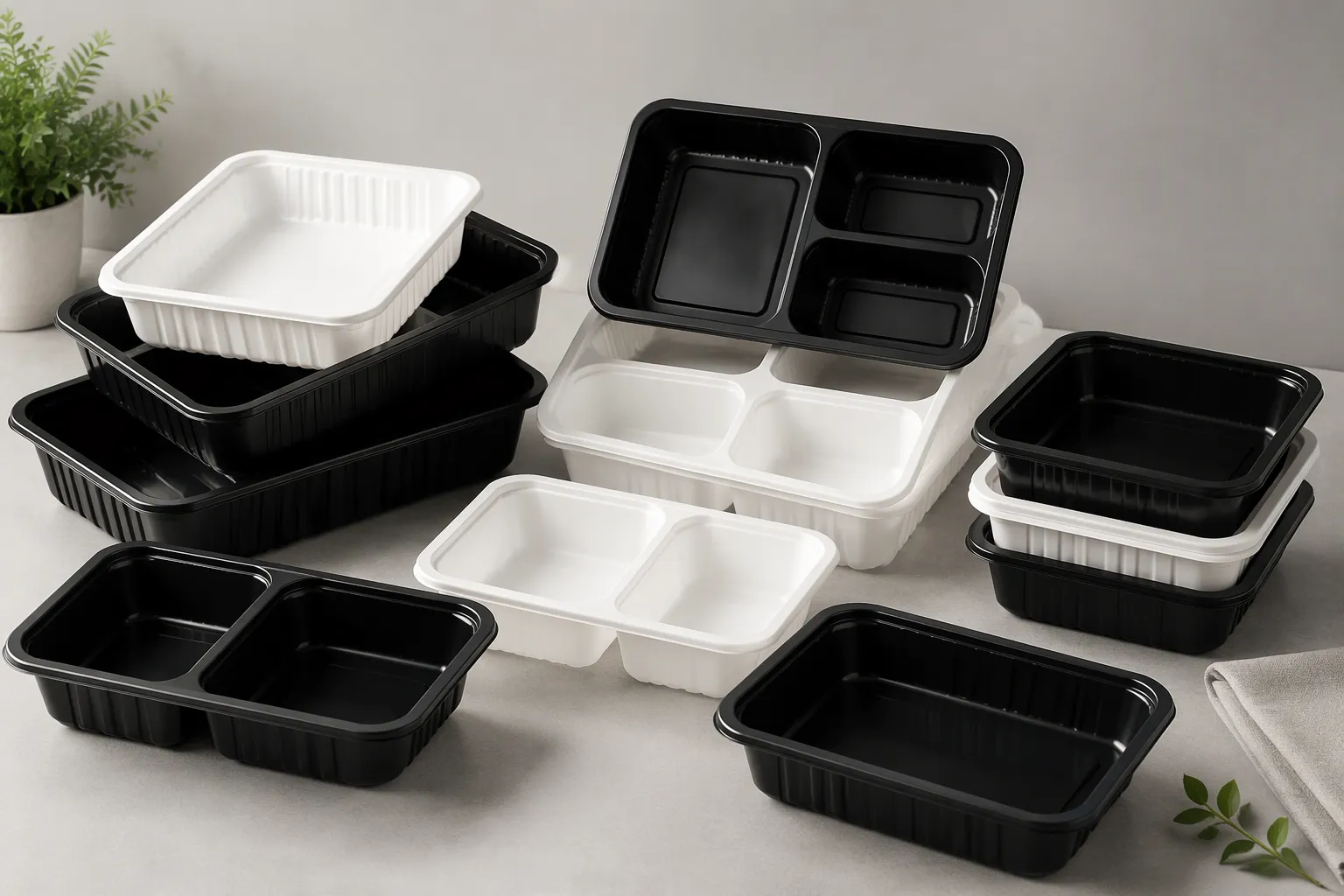
The table below lines up all ten formats on the attributes buyers screen first. Each row shows material format, compartment options, oven and microwave suitability, compliance status, OEM and custom mold availability, and a relative cost tier. Format 1 is a named supplier line; formats 2 to 10 are configurations that any tooling-capable supplier can quote.
Format | Material | Compartments | Oven / Microwave | Compliance | OEM / Custom Mold | Cost Tier |
|---|---|---|---|---|---|---|
1. Southern Champion Tray CPET Line | CPET | 1, 2, 3 | Dual ovenable | Documentation on request | Yes | Mid |
2. Dual-Ovenable Ready-Meal Format | CPET | 1, 2 | Dual ovenable | Documentation on request | Yes | Mid |
3. High-Rigidity Frozen Meal Format | CPET | 1, 2 | Dual ovenable | Documentation on request | Limited | Mid |
4. Airline Catering Meal Format | CPET | 1, 2, 3 | Dual ovenable | Documentation on request | Yes | Premium |
5. Stackable Takeaway Format | CPET | 1, 2 | Dual ovenable | Documentation on request | Yes | Economy |
6. Sealing-Film Compatible Format | CPET | 1, 2, 3 | Dual ovenable | Documentation on request | Yes | Mid |
7. Deep-Draw Family Meal Format | CPET | 1, 2 | Dual ovenable | Documentation on request | Limited | Mid |
8. Chilled Ready-Meal Format | CPET | 1, 2 | Dual ovenable | Documentation on request | Yes | Mid |
9. Multi-Compartment Bento Format | CPET | 3 | Dual ovenable | Documentation on request | Yes | Premium |
10. Recyclable Mono-Material Format | CPET | 1, 2, 3 | Dual ovenable | Documentation on request | Yes | Mid |
The numbering is a reading order, not a ranking. Formats differ mainly in compartment layout, wall rigidity, sealing surface design, and tooling status; several support custom tooling, while others ship from existing molds and therefore shorten lead time.
How to Read the Table
Compartment count and oven suitability narrow the list fastest. A three-compartment tray suits a separated ready meal; a single-compartment format fits high-volume takeaway. The OEM column shows whether a supplier can cut a custom mold or only supply a standard design, which is the usual reason a shortlist stalls.
Treat the compliance column as a prompt rather than a verdict. Every row reads the same because documentation is available for every format on request, so the column separates nothing. Buyers with strict internal review should request migration test reports and the finished-tray declaration before shortlisting, not after sampling. Cost tier is the last filter, and it only becomes meaningful once you know your annual volume and tooling position.
What Are CPET Trays?
CPET stands for crystallized polyethylene terephthalate. Manufacturers start with standard PET sheet and heat it under controlled conditions, which grows crystals inside the polymer structure. The crystals lock the material in place and deliver higher heat resistance than ordinary PET. Standard PET softens at modest temperatures; crystallized PET holds its shape through conventional-oven baking, so a CPET tray can move from freezer to oven without a transfer step.
Key Properties and Limits
Rigidity is the first practical property. A CPET tray keeps a flat base under a loaded meal, which supports stacking and automated handling. Dual-ovenable performance follows from the crystal structure: the same tray works in a microwave and a conventional oven, and this dual capability anchors most CPET packaging programs. Barrier behavior is moderate. The material resists grease and moisture well, yet it does not match high-barrier laminates for long ambient shelf life. Sealing compatibility matters for lidding film, and smooth flat rims accept heat-sealed film for a leak-resistant closure.
Limits deserve equal attention. A temperature guide should sit beside every specification sheet, because freezer, microwave, and oven limits vary by wall thickness and format. Thin walls flex more under load, and very high oven heat can distort a lightweight tray over long bake times. Buyers should confirm rated limits per format with the supplier rather than assume one figure covers the range.
Common Food Applications
These trays serve chilled and frozen ready meals, oven-bake dishes, and airline catering. A single-compartment tray suits high-volume takeaway, while two and three compartment trays separate protein, starch, and vegetables for plated presentation. Foodservice operators value the oven-to-table path; retail brands value the printable surface. Both groups rely on CPET for consistent performance across the cold chain and the oven.
CPET Trays vs. PET vs. PP
Performance and Temperature Range
The three materials diverge on heat. CPET is dual ovenable and rigid. Standard PET is not oven safe, so it suits chilled display. PP is microwave safe, flexible, and lightweight. The crystallization step is what gives CPET higher heat resistance than standard PET.
A CPET tray holds shape through conventional-oven baking. Standard PET food trays soften at modest heat and stay out of the oven. PP food trays handle microwave reheating well but flex under weight. Buyers comparing CPET, PET, and PP should weigh oven exposure first, then load bearing.
Compliance, Cost, and Best Fit
All three materials can carry food-contact documentation, and paper-based or molded-fiber trays now sit alongside them as a fourth option for cold or low-heat applications. Cost tiers vary by format and order volume. PET suits chilled deli counters, PP suits hot-fill takeaway, CPET suits oven-ready meals, and fiber suits cold salads. Documentation requirements are identical across all four, so the choice turns on heat exposure and sealing method rather than on paperwork.
Material | Heat Range | Best Fit |
|---|---|---|
CPET | Dual ovenable | Oven-ready meals, airline catering |
PET | Not oven-rated | Chilled display, deli counters |
PP | Microwave-rated | Lightweight takeaway, hot fill |
Molded fiber | Low heat | Cold applications, salads |
In practice CPET wins oven-ready meals, PP wins microwave-only takeaway, and fiber trays cover cold and low-heat packaging. Within each material, the deciding details are different: frozen meals need low-temperature rigidity, catering needs a sealing rim, delivery needs leak resistance, and retail needs printable surface area. Match the tray to the temperature exposure first, then confirm the compliance documents for the food packaging program.
How to Choose a CPET Tray
Food-Grade Certifications
Food-contact compliance documentation is the first item to request. A supplier should provide migration test reports and a declaration that the CPET tray meets the food safety standards of the buyer's market. The documentation should cover the finished tray, the lidding film, and any adhesive used in the seal.
Documentation review should happen early. A tray that passes oven testing but lacks migration data will stall at internal review, and a missing certificate can delay a launch late in the schedule. Buyers comparing PET and CPET formats should request the same documentation set for each. Suppliers who serve multiple regions usually hold certificates for each market, which shortens the review cycle.
OEM, Mold, and Sustainability
Custom mold capability separates suppliers. Some manufacturers cut new tooling for a specific compartment layout; others supply only standard molds. Standard trays ship faster, while custom trays need tooling time, and that lead time varies by format and compartment count. A CPET tray manufacturer in China with in-house tooling can adjust compartment depth without adding a vendor.
Sustainability claims need careful wording. CPET is a PET-based material that can be recovered and reprocessed through suitable recycling systems. Selected CPET trays now incorporate recycled PET, including post-consumer material. One distinction matters: a tray being recyclable does not mean it will be recycled, since collection infrastructure, sorting, and contamination all affect recovery. For customer-facing claims, the safer phrasing is that the packaging is designed for recyclability where local programs accept it.
Tray Profiles: Formats 1 to 10

Each profile states material, key advantages, compliance notes, and best applications. The order is a reading sequence, not a preference. Every CPET meal tray profile here earns its place through application fit.
Format 1: Southern Champion Tray CPET Line
Southern Champion Tray supplies a broad CPET line for ready meals and foodservice. The range covers food trays, lunch trays, and food tray sleeves, with tray codes running from 401 through 5678, which gives packaging teams many footprint options. Lunch tray codes include 590, 5951, 598, and 5981; sleeve codes are 70300 and 70500. The same supplier also lists pet food trays in four sizes, from #25 X-Small to #300 Large.
Key advantages center on oven and microwave performance. These trays are dual ovenable, so one format moves from cold storage to the oven without a transfer. Rigid walls support stacking and automated handling, and flat rims accept lidding film for a tight seal.
Best applications include ready meals, catering, and retail chilled dishes, plus pet food formats that need the same crystallized structure. This line fits programs that want a wide size range from one supplier.
Format 2: Dual-Ovenable Ready-Meal Format
This format targets the oven-ready meal segment: one and two compartment trays in mid-size footprints. The single-compartment version suits high-volume production, and the two-compartment version separates protein and starch for plated presentation. Dual-ovenable performance carries it across microwave reheating and conventional-oven baking, while a smooth sealing rim supports heat-sealed lidding film and limits leaks in transit. Best applications are frozen ready meals, chilled meal kits, and oven-bake dishes.
Format 3: High-Rigidity Frozen Meal Format
A thicker-wall variant built for frozen distribution, where stacking load and low-temperature handling matter more than tooling flexibility. Wall rigidity keeps the base flat under a full meal and resists flexing on pallets. Custom tooling is limited, so buyers usually select from existing molds and confirm the sealing rim width against their lidding film before committing.
Format 4: Airline Catering Meal Format
Airline service rewards stackability and oven-to-tray handling. Standard single-compartment sizes run 500ml, 650ml, and 750ml for main courses, with multi-compartment formats at 800ml and 1000ml for full meal sets. A stackable design saves galley space, and a flat rim allows foil or film lidding. Premium cabins usually take the two and three compartment variants.
Format 5: Stackable Takeaway Format
The economy option for high-volume delivery and takeaway. Rigid walls stack cleanly and resist flexing under load, which matters when trays are nested in insulated bags. Buyers should match the tray to the sealing method, confirm whether the format is sold with or without a lid, and check food-contact documentation before launch.
Format 6: Sealing-Film Compatible Format
Built around the sealing surface rather than the compartment count. A wide, flat rim gives the lidding film a continuous land, which is what a leak-resistant seal actually depends on. This format suits programs moving from manual lidding to automatic tray sealers, and it pairs with peelable or high-barrier film depending on shelf-life targets.
Format 7: Deep-Draw Family Meal Format
A deeper draw for family and sharing portions, where volume per tray matters more than compartment count. Deep walls increase the side-wall area, so rigidity and weight distribution become the limiting factors; buyers should check that the format still stacks when loaded. Custom tooling is limited, and standard molds usually cover the common portion sizes.
Format 8: Chilled Ready-Meal Format
Tuned for the chilled cabinet rather than the freezer, where the tray needs clarity of presentation and a clean print surface as much as heat resistance. Formats run one or two compartments. Since the tray is often lidded and displayed, rim flatness and label adhesion matter as much as oven rating.
Format 9: Multi-Compartment Bento Format
Three compartments in a single footprint, for menus that need protein, starch, and vegetables kept apart through transport and reheating. Compartment division is a tooling decision, so lead time runs longer than for single-compartment molds. Best fit is premium ready meals, bento service, and catering trays where separation is part of the product.
Format 10: Recyclable Mono-Material Format
A single-material construction designed for recyclability where collection systems accept CPET. Because there is no laminate or adhesive layer in the tray body, the format keeps the mono-material profile that recovery programs ask for. The lidding film is a separate component and should be assessed on its own; a recyclable tray with a non-recyclable lid is only half a claim.
Best CPET Trays by Use Case
Frozen and Chilled Ready Meals
Frozen and chilled programs demand low-temperature rigidity and a seal that survives the cold chain. Supplier data for crystallized PET cites a working range from −40 °C to 220 °C without loss of shape, and reports that crystallized PET retains roughly 94 percent of its strength after 50 freeze-thaw cycles, against about 67 percent for polypropylene. Those figures are supplier-reported rather than independently tested, so treat them as a starting point and confirm the rated range per format.
Sealing performance decides shelf life. A heat-sealed film on a flat rim creates a barrier against moisture vapor, oxygen, and odor transfer, and coextruded PE/EVOH/PE lidding adds an oxygen barrier for fatty meats and seafood. Ask for the seal strength and the leak test method, not just the film specification.
Foodservice and Airline Catering
Airline catering rewards oven-to-tray service and stackability. Trays move from cold storage to oven reheating without a transfer step, and a stackable design saves galley space. Standard single-compartment formats cover main courses, while multi-compartment formats hold full meal sets. Buyers specifying airline meal packaging should confirm one, two, and three compartment options, then validate seal integrity through a cold-chain trial before launch.
Format | Sizes | Best Use |
|---|---|---|
Standard | 500ml / 650ml / 750ml | Main courses |
Multi-compartment | 800ml / 1000ml | Full meal sets |
Economy | 450ml / 600ml | Snacks and sides |
Airline programs usually standardize one tray family across cabins, then audit it for seal integrity and warping after oven cycles. Weight and heat resistance pull in opposite directions, so confirm the wall thickness against the galley oven profile rather than assuming the lightest tray is the best one.
Takeaway and Delivery
High-volume operators need lightweight, stackable formats. A CPET tray with rigid walls stacks cleanly and resists flexing under load, and it reheats in the consumer's oven rather than requiring a transfer to a plate. Buyers should match the tray to the sealing method and confirm food packaging documentation before launch.
Choosing a CPET tray starts with five checks: temperature exposure, compartment needs, sealing method, compliance documentation, and order volume. The best format depends on application fit, not on a universal ranking. Readers who need a fast shortlist should start with the use-case section above, which maps each format to frozen meals, catering, and takeaway.
A practical next step follows. Request samples of the leading formats, confirm minimum order quantities, and collect certification documents for every food packaging format. Test each tray under real handling conditions, compare the shortlisted options side by side, then confirm the final choice. This keeps the packaging program grounded in verified performance.
FAQ
Are CPET trays safe for both oven and microwave use?
Yes. CPET is dual ovenable, so one tray moves from cold storage to the microwave or the conventional oven without a transfer. Rated limits vary by wall thickness and format, so confirm the temperature range with the supplier before launch.
What temperature range do CPET trays handle?
Suppliers report a working range from −40 °C to 220 °C. Crystallized PET is reported to keep about 94 percent of its strength after 50 freeze-thaw cycles, and a tray held at 200 °C for 30 minutes is reported to lose less than 1 percent of its weight. Confirm those figures against the specification sheet for your format.
Which compartment options are available?
Formats come in one, two, and three compartments. Single-compartment trays suit high-volume takeaway and main courses, while two and three compartment trays separate protein, starch, and vegetables. Airline meal trays in multi-compartment designs hold full meal sets for premium cabins.
Do CPET trays work for airline catering?
Yes. Trays in crystallized PET move from cold storage to oven reheating without plating. Standard sizes run 500ml, 650ml, and 750ml for main courses, and multi-compartment formats at 800ml and 1000ml hold full meal sets. Stackable designs save galley space.
What documentation should buyers request?
Request migration test reports and a food-contact declaration covering the finished tray, the lidding film, and any seal adhesive. Confirm the paperwork covers the buyer's market. This step protects the food packaging program from late-stage rejection at internal review.


Recommended Products

Food Grade 1 2 3 Compartment Takeaway Containers CPET Trays For Food Packaging

White Color CPET Food Container For Airline CPET Tray

Airline Use Small White 1 Compartment Wholesale CPET Tray

High Quality White 3 Conpartments China Disposable CPET Tray

FDA-approved CPET Plastic for Ovenable Containers 1 2 3 Compartment CPET Tray

White Color CPET Tray Food Container

different colors microwave oven safe cpet food containers cpet tray for ready meal


Recent News
1.Top 5 cpet tray manufacturers in China
2026-01-082.Best CPET Tray Suppliers for Ready Meal Packaging in 2026
2026-05-263.The Complete Guide to CPET Trays for Frozen Ready Meals
2026-06-154.Custom CPET Trays for Airline Catering: Lightweight, Metal-Detectable & Microwave-Safe
2026-09-295.How CPET Trays Extend Shelf Life for Frozen Bakery Products (Cakes, Pastries, Ready Meals)
2026-10-146.10 Best CPET Trays for Food Packaging in 2026
2026-11-07