


 ruby@hgqyplastic.com



A Complete Guide to Finding Trustworthy Custom Food Packaging Suppliers in China
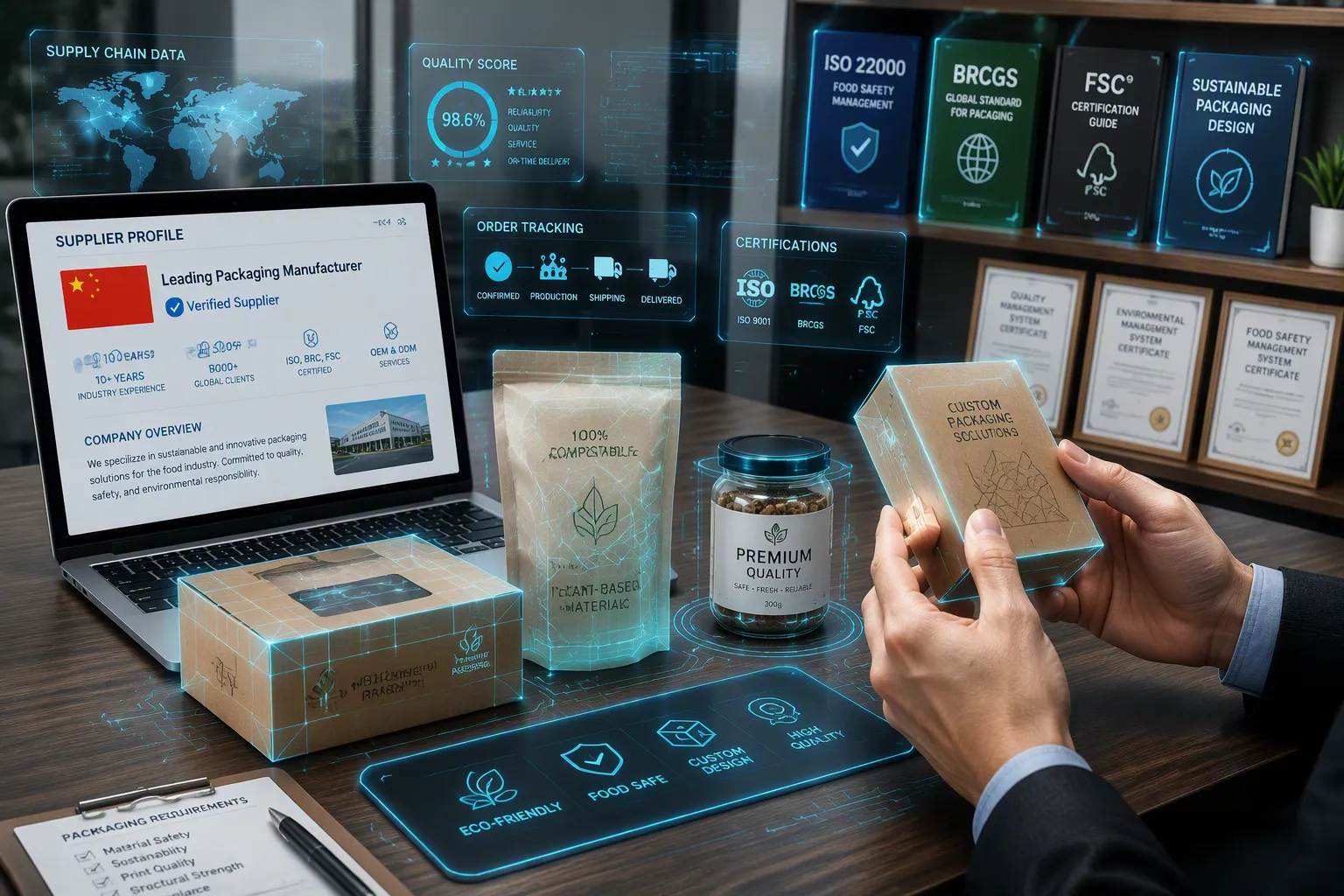
You want safe custom food packaging from China. But scams, bad materials, and late orders make you worry. Your concern makes sense. This guide gives you a proven plan: research platforms, check certifications, test samples, and audit factories. This step-by-step method protects your reputation and builds trustworthy sourcing partnerships.
Key Takeaways
Look up suppliers on B2B sites like Alibaba and Global Sources. Check for verified badges and certifications such as ISO 22000 and FDA. This step helps you avoid scams and find trustworthy partners.
Test pre-production samples in accredited labs. This makes sure your packaging follows safety rules and protects customers. It also stops costly mistakes later.
Use safe payment methods like L/C at sight to keep your deposit safe. This lowers risk and helps you trust your supplier. Always check certifications before you pay.
Why China Leads in Custom Packaging Quality
China has built the biggest system in the world for making food packaging. This large scale gives your business real advantages. You can get lower costs, many kinds of materials, and modern production methods. When you understand these benefits, you can negotiate with more knowledge.
Cost Benefits of Direct Sourcing
You save money when you buy straight from factories. Local middlemen add extra charges at every step. A direct connection cuts out those layers. You pay closer to the real production cost. This gap often reaches double-digit percentages.
B2B platforms like Alibaba and Global Sources are common starting points for your sourcing journey. These sites link you with thousands of packaging companies in china. You can compare prices side by side. Many suppliers give lower prices for bigger orders. Direct sourcing also gives you more control over specifications and timelines.
Access to Sustainable and Specialty Materials
Chinese manufacturers offer a wide and impressive range of materials. You can pick bagasse, PLA, kraft paper, or bamboo for your food packaging. These sustainable choices meet growing consumer demand for eco-friendly products. Many food packaging companies now focus on compostable and recyclable solutions.
Customization and innovation in packaging drive this mix of materials. Factories put money into new technology to stay competitive. This innovation helps your brand. You get access to special finishes, unique shapes, and advanced printing techniques. Direct relationships with suppliers open up more options. You can ask for materials that local vendors just cannot source. This flexibility supports your product goals and your sustainability commitments.
Defining Your Custom Food Packaging Needs
Types, Materials, and Customization Options
You need to plan your packaging types before you talk to any supplier. Primary packaging touches food directly. Examples are wrappers, trays, and sealed pouches. Secondary packaging holds the smaller packages, like a printed box for six snack bars. Restaurant takeout containers are a third type. Each type has its own material needs and rules to follow.
Sustainable materials are very popular now. You can pick bagasse for molded trays, PLA for clear compostable windows, kraft paper for grease-resistant wraps, or bamboo for sturdy utensils and bowls. These choices help your brand's image and meet what customers want. Many food packaging companies spend a lot on these products. You can change the shape, finish, and print to fit your product. Good customization also makes the package look better on shelves and cuts waste.
Key Certifications for Food Safety Compliance
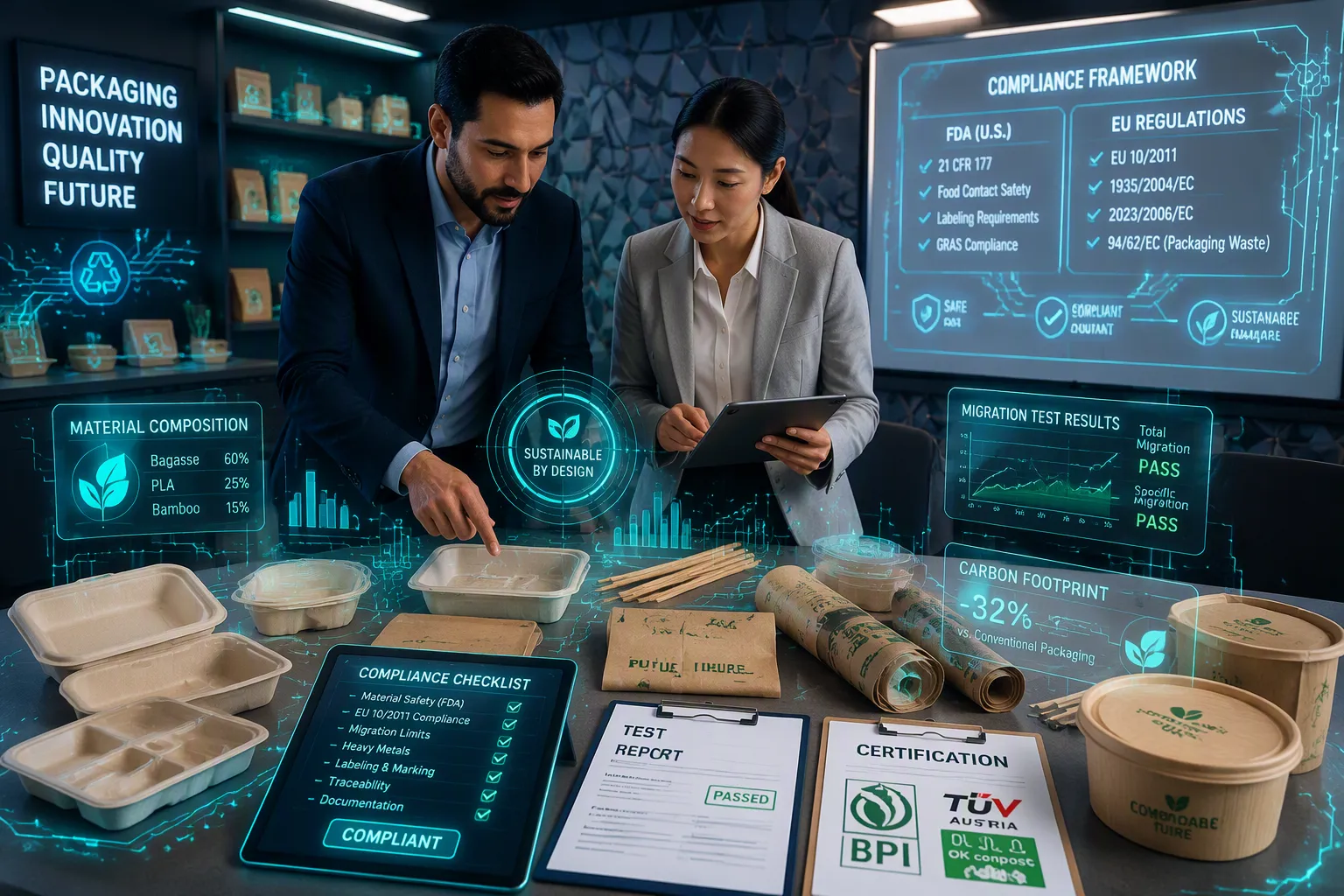
Certifications turn a good supplier into a safe partner. ISO 22000 makes sure food is safe from start to finish. FDA approval shows your materials follow U.S. rules. These standards keep your customers safe and your business from product recalls.
The table below lists what your suppliers must show for each set of rules.
Regulatory Framework | Compliance Pathway | Specific Testing Requirements |
|---|---|---|
FDA 21 CFR | Listed in Parts 170–199 | Migration tests may check that no bad chemicals leak into food |
FDA GRAS | 21 CFR Parts 182, 184, 186 | No extra approval needed if the substance is on the GRAS list |
EU 1935/2004 | Framework Regulation for all food contact materials | Materials must not be toxic or change the food's makeup |
EU 10/2011 | Positive list for plastics | Overall migration tests, heavy metal tests, and taste tests |
EU DoC | Mandatory for plastics and composites | Lab reports from outside firms like SGS, Intertek, or TÜV |
Chinese suppliers on Alibaba often use a system where they say it's okay themselves. They rarely give you an official paper that says they follow rules. You must set up lab tests with an outside company yourself. Link each certification need to how you choose suppliers. Ask for proof papers before you pay any money. This step helps tell good packaging companies in China from bad ones. This filter keeps your sourcing safe.
How to Check Supplier Reputation and Quality
Researching Verified B2B Platforms
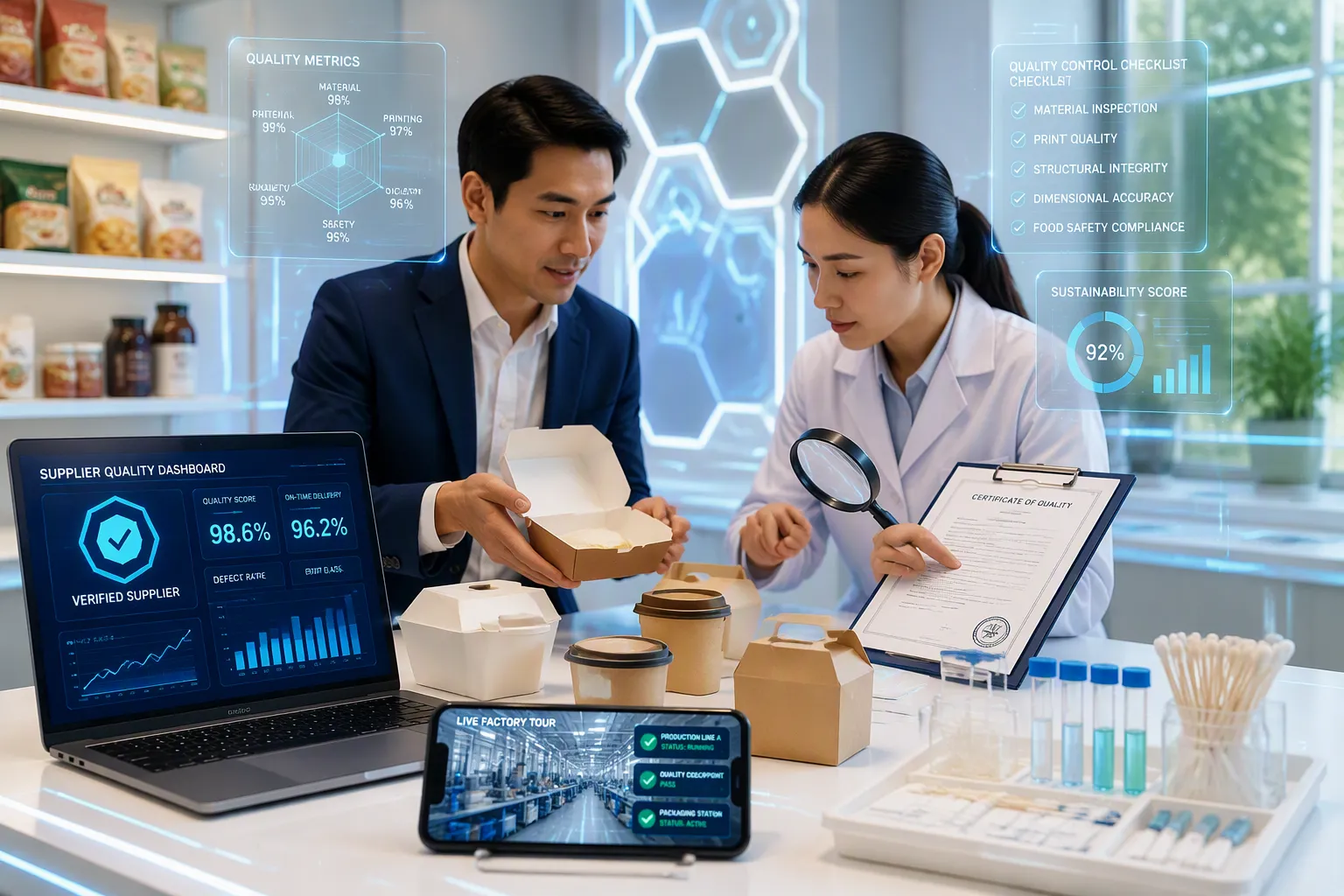
Platform badges help you start checking a supplier's reputation. Alibaba's Verified badge means a third-party team checked the business license and factory. Trade Assurance protects your payment if the supplier breaks the contract. Global Sources has similar checks. Their Verified Manufacturer badge confirms business scope through independent firms like D&B, Ease Credit, or TÜV SÜD. The Supplier Capability Assessment adds an onsite visit. This visit covers operations, production capacity, quality control, and management. You can also meet verified exhibitors face-to-face at Global Sources trade shows.
Large, certified packaging companies in China set the standard. Dashan, YUTO, and Sun Paper hold ISO 22000 and FDA-related certifications. These food packaging companies serve global brands and pass strict audits. Their reputation comes from years of steady quality and safety.
Watch for three red flags that point to a fraudulent supplier. Fake certification documents top the list. A supplier may show forged or expired certificates to win your order. Always check the certificate number in the issuing authority's database. Trading companies posing as factories come second. They show stolen factory photos and claim direct manufacturing. Ask for a live video tour and check the address on Google Maps satellite view. Unverified factory addresses are the third warning sign. A real factory sits in an industrial zone, not a commercial or residential building.
Evaluating Samples and Audit Reports
Ask for pre-production samples before you commit to bulk orders. Test these samples in an accredited lab. Migration testing for heavy metals follows EN 645 and EN 647 for paper and board. Microbiological examination uses ISO 8784-1 and ISO 8784-3 to count bacteria, yeast, and mold. Overall migration testing follows EN 1186-1, EN 1186-2, and EN 1186-3 with various simulants. Specific migration testing under EN 13130-1 checks substances like bisphenol A and melamine. These tests protect your customers and your brand.
Factory audits reveal the truth behind platform badges. Hire a third-party inspector to visit the production site. The auditor checks machinery, hygiene, and quality control systems. This step confirms the supplier's certifications are real and current. You also learn whether the factory meets your standards for custom food packaging.
Rigorous filtering early prevents costly mistakes later. Check customer feedback and company reputation on multiple platforms. Look for patterns in feedback about late shipments or material defects. Direct communication with the factory manager clarifies technical details. Ask specific questions about production capacity and lead times. A supplier who answers slowly or vaguely may lack real manufacturing capability. Evaluating quality and compliance at this stage saves you from failed orders and refund disputes. Your sourcing process becomes safer when you verify every claim before payment.
Navigating Negotiation and Customization
Clarifying Specifications and Payment Terms
You need to explain your plan before you talk about cost. Write down sizes, material grade, print colors, and minimum order quantities (MOQs). Follow this order: define your plan, find manufacturers, then ask for samples. Clear details stop confusion later. Customization and innovation in packaging often change lead times and MOQs. Ask your suppliers how each change affects production schedules.
Payment terms keep your deposit safe. Compare your choices carefully.
Payment Method | Buyer Protection Level | Typical Order Size | Complexity |
|---|---|---|---|
T/T in advance (e.g., 30% upfront) | Medium (balanced by BL mechanic) | $1K–$500K | Low |
L/C at sight | Very High (bank-guaranteed) | $50K+ (usually $100K+) | High |
A 30% T/T upfront puts 30% of your order value at risk if the factory fails. An L/C at sight keeps your deposit safe because the bank checks documents first. Pick the method that fits your order size and risk tolerance.
Conducting Pre-Production Quality Checks
Pre-production quality control stops defects before mass production starts. Your checklist should cover these checkpoints:
Incoming visual inspection checks raw materials for visible damage, wrong items, or clear defects.
Dimensional verification confirms products meet your specifications.
Material certification review validates supplier compliance with safety standards.
Safety and compliance checks confirm regulatory requirements.
Clear pass/fail rules with set tolerance ranges guide every inspection.
Photo and measurement data record all findings.
Skipping material verification and supplier audits during pre-production can let bad parts into production and raise rejection rates by 15–20%. During production inspection checks that raw materials and components match requirements. It also checks dimensions, functions, safety, labeling, and packaging. Defects get grouped as critical, major, or minor. This layered approach makes your quality control system stronger. Open communication with your suppliers about feedback and inspection results builds trust. Reliable food packaging companies welcome this transparency.
Avoiding Common Sourcing Pitfalls
Overcoming Communication and Cultural Hurdles
Language barriers and time-zone gaps create real risks for your sourcing project. A small wording mistake in your specifications can lead to wrong dimensions, incorrect colors, or missed deadlines. You should write every detail in a clear, written agreement. Confirm sizes, material grades, and delivery dates in writing before you pay anything.
Good communication also means understanding cultural differences in business style. Chinese suppliers often avoid saying "no" directly. They may agree to a deadline they cannot meet. Ask specific questions and request written confirmation for every answer. Schedule regular video calls to review progress. This habit builds trust and catches problems early. Clear communication protects your investment and strengthens your relationship with suppliers.
Balancing Cost with Safety and Compliance
A low price can hide serious dangers. Some buyers chase the cheapest quote and skip certification checks. This choice often leads to substandard materials that fail safety tests. Your customers could get sick. Your brand could face recalls and legal action.
You must treat safety and compliance as non-negotiable. Always verify certifications like ISO 22000 or FDA compliance before you order. Test pre-production samples in an accredited lab. Evaluating quality and compliance at every stage protects your business. Reliable food packaging companies in China welcome these checks. They know that quality and safety build long-term partnerships. Paying slightly more for a verified supplier saves you from costly mistakes later. Your reputation depends on the products you sell.
Start by figuring out what you need. Look into sourcing platforms and check what people say about suppliers. Test samples for quality before you place a big order. Don't take shortcuts when sourcing. Choose suppliers you can trust. Test every pre-production sample before full production begins. Say no to suppliers who can't show real ISO 22000 or FDA certifications. Get our supplier vetting checklist. Tell us your biggest custom food packaging problem and leave your feedback below.
FAQ
How do I confirm a Chinese packaging factory is legitimate?
Look for the Alibaba Verified badge and Trade Assurance coverage. Ask for a live video tour of the factory. Check the factory address using satellite maps. Request ISO 22000 or FDA certificates, then confirm each number in the database of the agency that issued it.
What payment method protects my deposit best?
An L/C at sight gives you the strongest protection. The bank checks the documents first before releasing any money. A 30% T/T upfront leaves that part of your payment at risk. Pick the method that matches your order size and how much risk you can handle.
Why should I test a pre-production sample?
A pre-production sample shows you the material quality, print accuracy, and safety compliance before bulk production starts. Lab tests from accredited firms catch migration or contamination problems early. This step keeps your customers safe and helps you avoid costly refund fights with suppliers.