ruby@hgqyplastic.com



Rigid PVC Sheets for Industrial Applications: From Lamp Shades to Cooling Tower Fill
Rigid PVC sheets are thermoplastic panels also called Type 1 PVC or unplasticized PVC (PVC-U). These stiff panels give great durability, chemical resistance, and flame retardancy. You will find rigid plastic sheet products in many uses, from decorative lamp shades to important cooling tower fill. Thermoforming these sheets allows for flexible industrial solutions.
Key Takeaways
Rigid PVC sheets stand up to chemicals and flames, so they work great for industrial jobs like cooling tower fill and machine guards.
You can shape rigid PVC sheets with heat to make custom lamp shades, signs, and protective covers.
For outdoor projects, choose UV-stabilized PVC sheets to stop yellowing and keep them strong for years.
Key Properties of Rigid PVC Sheets
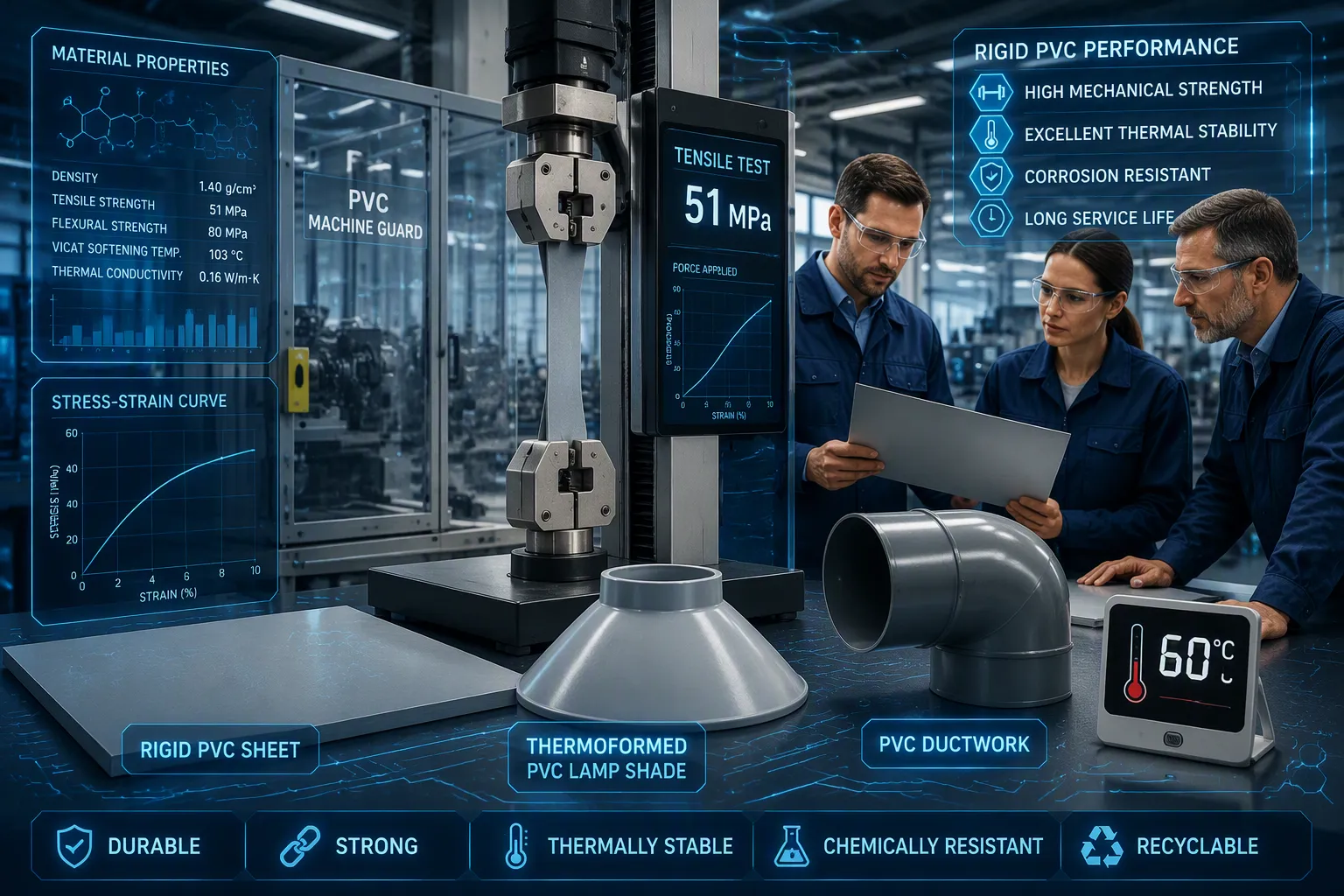
These panels give you durability, mechanical strength, thermal stability, and chemical resistance. You can count on this material to perform the same way every time.
Mechanical and Thermal Performance
Rigid PVC has high tensile strength and keeps its shape very well. The material holds its form when weight is placed on it. You save money because it lasts a long time and costs less than metals or engineered plastics.
This strength works well for structures where you need stiffness without cracking. You can use it in machine guards, tank covers, and ductwork that must keep their shape under physical stress.
The heat distortion temperature falls between 60–80°C (140–176°F). Above these temperatures, the material loses its structure under constant stress. You should think about this heat limit when you design parts exposed to heat. Dimensional stability means the material resists warping and creep within its rated temperature range. This stability allows tight-tolerance fabrication without extra adjustments after processing.
Thermoforming uses this thermal behavior to its advantage. You heat the material to forming temperature and shape it into curved forms. This skill links to uses like lamp shades and signage. Thermoforming also makes custom shapes for industrial enclosures and protective covers. The material keeps its mechanical properties after forming.
Chemical Resistance and Flame Retardancy
PVC works great where chemical exposure is a worry. The material resists acids, bases, and industrial chemicals. This resistance makes it a top choice for tank linings, ductwork, and chemical processing equipment. You can pick PVC for handling sulfuric acid, hydrochloric acid, and caustic soda solutions at moderate temperatures. The material does not corrode or break down. You do not need costly metal alloys or special coatings. PVC gives you reliable protection at a much lower cost.
The flame retardant properties add another layer of safety. The material is self-extinguishing. It stops burning once you take away the ignition source. This happens because of chlorine content in the PVC formulation. You do not need extra additives. The material meets UL 94 V-0 ratings for vertical burn testing. You can choose PVC where building codes require fire-rated materials. Many industries need this fire safety for equipment in occupied spaces or near ignition risks. The material makes less smoke than many other plastics.
The mix of chemical resistance and flame retardancy makes PVC good for demanding infrastructure uses. Cooling tower fill and scrubber media gain from these properties. These uses expose the material to constant water flow, chemical treatment, and fire hazards. PVC handles these conditions without breaking down. The chlorine content that gives flame retardancy also fights biological growth. This stops biofouling in cooling tower fill over long service periods. You get long-term performance in equipment that runs nonstop for years.
Decorative and Light-Duty Applications
Lamp Shades and Signage
Rigid PVC sheets work well for decoration. Thermoforming lets you shape these panels into curved lamp shades and three‑dimensional signs. You heat the sheet until it is soft, then you press it over a mold. This method works for both small batches and large production runs. Industrial thermoforming shops use it every day for custom lighting fixtures.
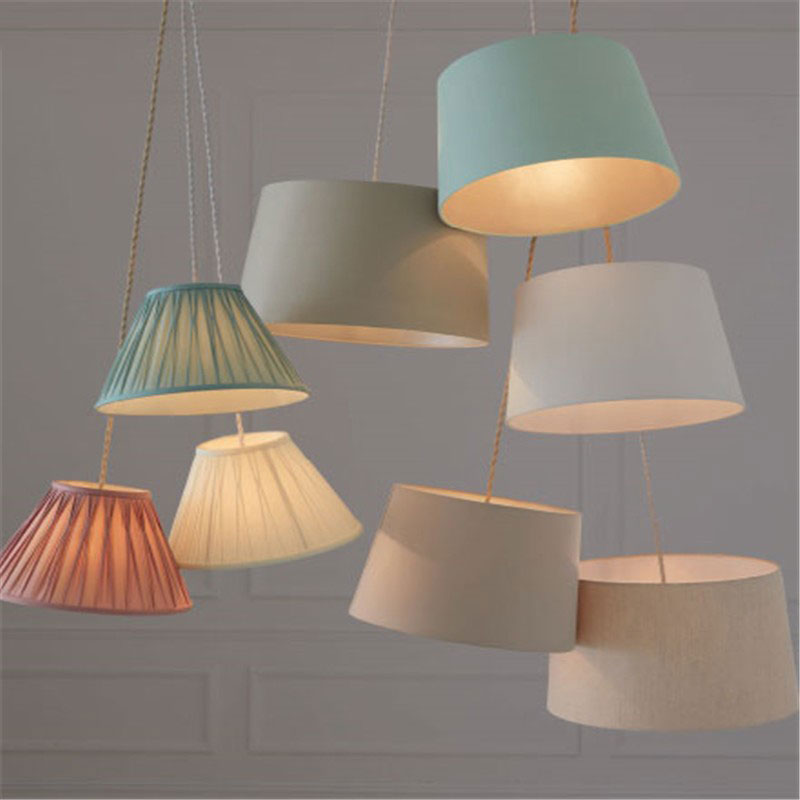
Your choice of material changes the final look. Milk white PVC spreads light and makes a soft interior glow. Matte PVC reduces glare for modern shades and printed panels. Self‑adhesive PVC has a release liner. You can stick fabric or wallpaper right onto it to make hard‑backed lamp shades. Bare white PVC acts as a strong base when you add your own glue or print. Translucent and clear options let an outer decorative layer control how light looks. Custom looks let you match color, opacity, and surface to a brand.
Clear rigid PVC lets 85–88% of visible light pass through. Acrylic reaches 92%, so PVC looks a little cloudy next to acrylic.
Acrylic lets up to 92% of visible white light through and is almost crystal clear. PVC sheeting has a slight cloudiness and is not as clear as acrylic.
That trade‑off rarely matters for diffused or layered designs.
Formability and Aesthetic Options
Thermoforming brings out the decorative side of this material. You can bend, drape, and stretch heated sheets into tricky curves. PVC thermoforming works great for signs with raised letters and shaped edges. Industrial thermoforming also makes protective covers and display parts.
The color range covers clear, white, black, and custom colors. Roll form stock allows non‑stop making of long panels. Expanded PVC is a light choice for displays and trade show booths. This foam‑core version cuts easily and holds printed graphics well. Common PVC board uses include exhibit walls, menu boards, and point‑of‑sale stands. These popular uses gain from low weight and simple mounting. You save on shipping and installation labor compared with heavier materials.
Structural and Protective Applications
Machine Guards and Tank Linings
Rigid PVC sheets show up in chemical tanks, ductwork, and industrial plating lines. These panels stand up to acids and bases that eat away metal parts. A tank lining made from rigid PVC keeps steel vessels safe from corrosive liquids. Ductwork moves chemical fumes without rusting or leaking. Industrial plating operations count on PVC because the material survives constant contact with plating baths.
Impact Resistance and Fabrication Ease
Impact resistance makes rigid PVC stand out from weaker plastics. The material takes sudden hits without cracking. Machine guards made from these panels shield workers from flying debris. You get high stiffness for structural frames and protective barriers. This strength keeps equipment safe through many years of use.
Fabrication is easy with standard woodworking tools. You can cut, weld, and machine rigid PVC just like wood. Industrial thermoforming shops shape these panels into custom guards and covers. PVC thermoforming also makes complex ductwork fittings. A fabrication shop welds sections together for large tank linings.
Standard sheet sizes help you plan your purchases. Most suppliers stock 4x8 foot panels in common thicknesses. You can order custom cuts for large projects. This sizing keeps waste low and speeds up installation.
These popular uses show why rigid PVC works across many industries. Chemical plants, water treatment facilities, and manufacturing floors all depend on this material. The panels handle tough conditions without costly replacements.
Rigid PVC in High-Performance Infrastructure
Cooling Tower Fill and Scrubber Media
Cooling towers need materials you can trust. You pick rigid PVC sheets for fill media. PVC fights biofouling when water flows nonstop. The material keeps its structure for many years. Thermoforming makes the complex shapes you need. These shapes give you the most surface area for heat transfer. The thermoforming process creates even patterns. Each pattern helps water spread out better. Scrubber media also depends on PVC. Thermoforming shapes the sheets into structured packing. This packing stands up to harsh chemicals. The thermoforming operation gives you exact control over geometry. You get steady gas-liquid contact. Thermoforming lets you design custom parts for each tower. Industrial thermoforming shops make these components in large amounts. Shop know-how ensures quality. You get dependable performance in industrial settings. The cooling tower industry counts on this material. The fill media must handle water exposure all the time.
UV Stability and Long-Term Chemical Exposure
Outdoor use calls for UV stabilization. Regular PVC breaks down in sunlight. You must choose UV-stabilized grades for outside applications. These mixes resist yellowing. Thermoforming does not cut down UV protection. The thermoforming process keeps additives spread out evenly. You get even protection across the part. Long-term testing proves PVC performance in industrial settings. Industrial plating baths use PVC ductwork. Thermoforming creates complex duct fittings. These fittings resist acids for many years. PVC thermoforming also makes tank linings. You get seamless protection with no joints. Fabrication depends on skilled expertise. You pick the right formulation for each environment. The material gives you precision for critical infrastructure. You trust rigid PVC for long-term chemical exposure.
Selecting the Right PVC Sheet
The material you pick depends on what your project needs. You check thickness, UV stability, and rules for each job.
Thickness, Color, and UV Stabilization
Your first choice is how thick the sheet should be. This factor changes how much weight it can hold and how long it lasts. Outdoor structures need thicker panels. The suggested range for structural loads is 15 mm to 50 mm. An engineer must review these loads. Light signs use thinner sheets from 1 mm to 6 mm.
Application | Thickness Range | Recommended |
|---|---|---|
Structural | 15–50 mm | Engineering required |
For any outdoor use in Canada, UV-stabilized rigid PVC is required. Normal material breaks down and turns brittle under UV light. You must pick the right stabilization system for your climate.
Additive | Type | Function/Notes |
|---|---|---|
Titanium dioxide (TiO₂) | Inorganic UV blocker | Absorbs and scatters UV; rutile form preferred for outdoor use; fine particles disperse well in PVC. |
Benzotriazoles | Organic UV absorber | High UV absorption efficiency, good thermal stability, low volatility; commonly used with TiO₂. |
Benzophenones | Organic UV absorber | Older technology, less stable, narrower UV absorption; still used in some formulations. |
Carbon black | Particulate reinforcing filler | Absorbs UV and converts to heat; limited to dark-colored uses; may cause heat aging. |
Hindered phenolic antioxidants | Radical scavenger | Neutralizes radicals formed despite UV absorbers; synergizes with UV absorbers. |
Phosphite antioxidants | Radical scavenger | Often used alongside hindered phenolics for complementary stabilization. |
Organotin stabilizers | Heat/UV stabilizer | Primarily for heat aging but also provides early-stage UV radical stabilization. |
Hindered amine light stabilizers (HALS) | Free radical scavenger | Regenerative; but in PVC, HCl released during degradation can deactivate them. |
Color also changes how fast you get your order. Standard sheets ship quickly. Custom colors take longer to arrive.
Condition | Lead Time / Availability |
|---|---|
Standard PVC sheets (1220x2440mm, 1000x2000mm) | Kept in stock |
In-stock items | Ship within 3–7 days |
Standard specifications or currently in-stock items | Ship within 1–5 days |
Orders requiring cutting or large quantities | Ship within 15 days |
Custom PVC sheets (customized colors, dimensions, properties) | Lead time depends on complexity and order quantity |
Thermoforming turns standard sheets into custom shapes. This thermoforming method saves production time. You depend on thermoforming for custom shapes. Industrial thermoforming shops handle thin and thick gauges. The thermoforming process keeps additives spread out evenly. Pvc thermoforming creates complex shapes. Custom industrial thermoforming services match your exact specs. Each thermoforming step needs careful temperature control. Industrial thermoforming skill delivers quality results. Thermoforming lowers tooling costs. You save money with efficient fabrication.
Compliance Standards and Certifications
Your industry may need certain certifications. Food-contact uses follow FDA rules. Industrial users must check material grade against these standards.
Rigid PVC may be used in direct food-contact applications only when it is a vinyl chloride copolymer grade that complies with 21 CFR 177.1980.
The broader FDA regulation covering polymers used as indirect food additives is 21 CFR Part 177.
The UL 94 V-0 rating covers flame retardancy. Many building codes require this certification. Other standards include NSF for potable water. You ask suppliers for technical datasheets. These documents confirm the material meets your needs. This material offers cost-effectiveness compared to metals. You pay less for both material and fabrication. You get reliable performance for many years.
Rigid PVC sheets give strength, chemical resistance, and flame retardancy in many factory uses. PVC costs less than metal or other plastics for these tough jobs. Thermoforming gives you more design choices. Thermoforming makes custom shapes quickly and accurately. Check what your project needs. Choose PVC as a strong, long-lasting option. Ask suppliers or check technical datasheets for your next factory project.
FAQ
You often ask questions about PVC thermoforming for industrial projects. The thermoforming process requires understanding temperature limits. Each thermoforming application has specific needs. Thermoforming expertise helps you avoid common mistakes. The thermoforming method works for many part sizes. Thermoforming shops offer design guidance. The thermoforming industry uses various thicknesses. Thermoforming temperature control ensures quality. This FAQ answers common PVC questions.
What temperature range works for thermoforming PVC sheets?
You heat rigid PVC sheets to 60-80°C for thermoforming. The thermoforming process softens the material. Thermoforming gives you custom parts.
Does UV stabilization affect PVC thermoforming for outdoor use?
UV-stabilized PVC works for thermoforming. The thermoforming process keeps PVC additives distributed evenly. Thermoforming gives you consistent PVC outdoor protection.
How does thermoforming compare to machining for PVC fabrication?
Thermoforming creates complex curved shapes. The thermoforming method works faster than machining. Thermoforming also costs less for medium production runs.


Recent News
1.PETG Sheets vs Acrylic vs Polycarbonate: Which Clear Plastic Sheet Is Best for Your Project?
2026-09-072.PVC sheet supplier: PVC vs PETG material comparison for 2026 applications
2026-09-023.Why Choose PET Sheets for Thermoforming from HSQY
2026-08-254.Where Can I Find Transparent PVC Sheets? A Complete Sourcing Guide for 2026
2026-08-20