


 ruby@hgqyplastic.com



Contact HSQY today for certified materials, full traceability, and competitive total landed costs. Request your technical data sheets and samples now.
Get free sample nowPVC sheet supplier: PVC vs PETG material comparison for 2026 applications
2026/09/02| View:289
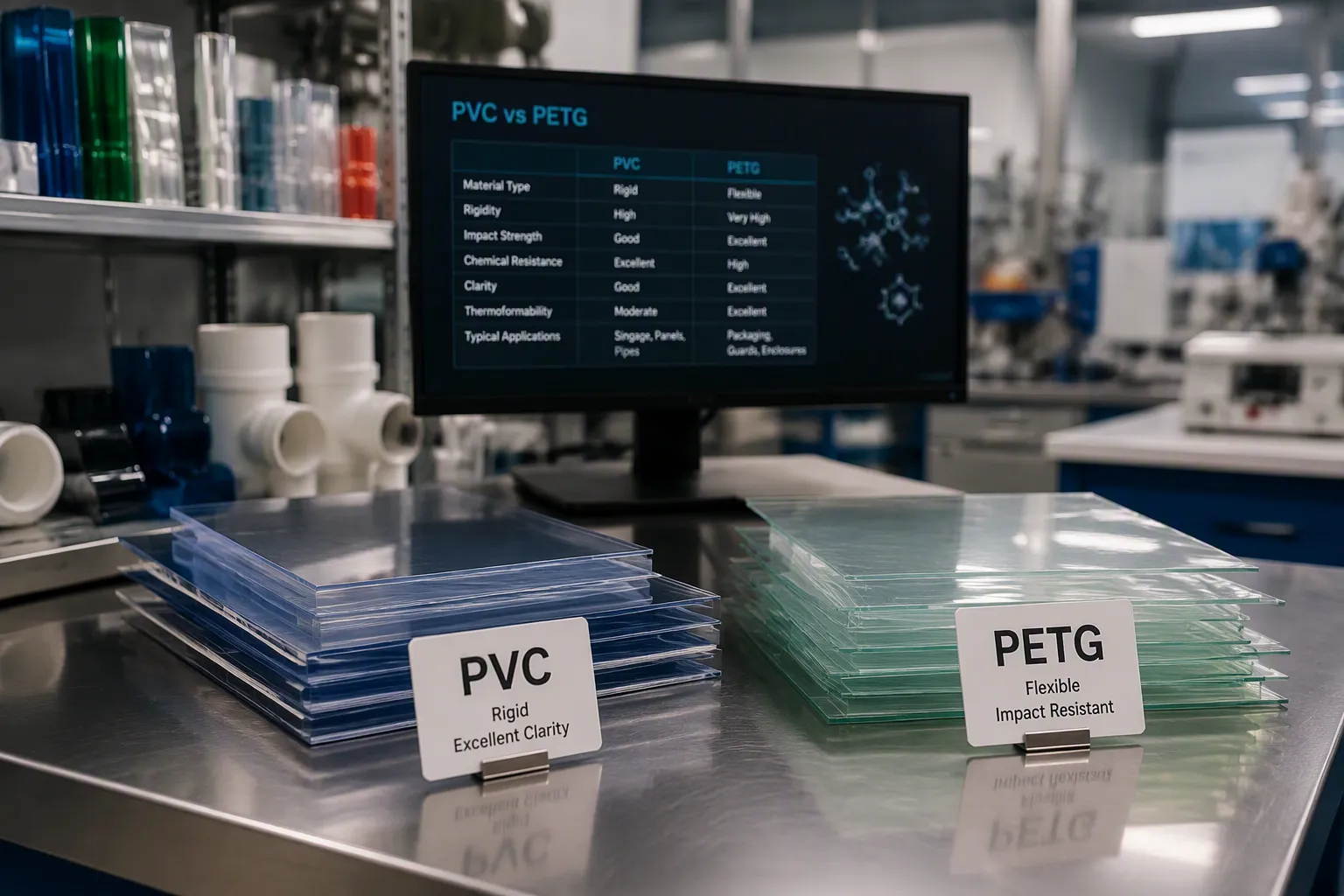
For 2026, picking between PVC and PETG depends on what your project needs—there is no single best choice. PVC gives better chemical resistance and costs less. PETG offers stronger impact resistance, clearer look, and holds its shape better. Do you care more about chemical resistance or impact resistance? This guide looks at their traits, reviews 2026 uses, and gives a simple way to talk with suppliers. Your PVC sheet supplier can check both materials for your packaging needs.
Key Takeaways
Pick PETG when you need clear, tough, and stable shapes; pick PVC when you need chemical resistance and a cheaper price.
Match material properties to your application: PETG works well for retail displays and medical packaging, while PVC fits industrial and chemical-resistant uses.
Look at the full cost of getting the product to you, plus the supplier's quality and safety certifications, not just the price tag. This helps you avoid surprise fees and makes sure everything meets the rules.
Clarity and Optics
PETG Transparency
PETG delivers exceptional optical clarity that makes it the preferred choice for applications where visual appeal matters. You will notice the difference immediately when comparing sheets side by side. A 1-mm thick PETG sheet transmits approximately 92% of visible light, which explains why manufacturers cite this figure as the benchmark for transparency. Standard PETG sheets fall within a 90-92% transmission range, giving you consistent brightness across production runs.
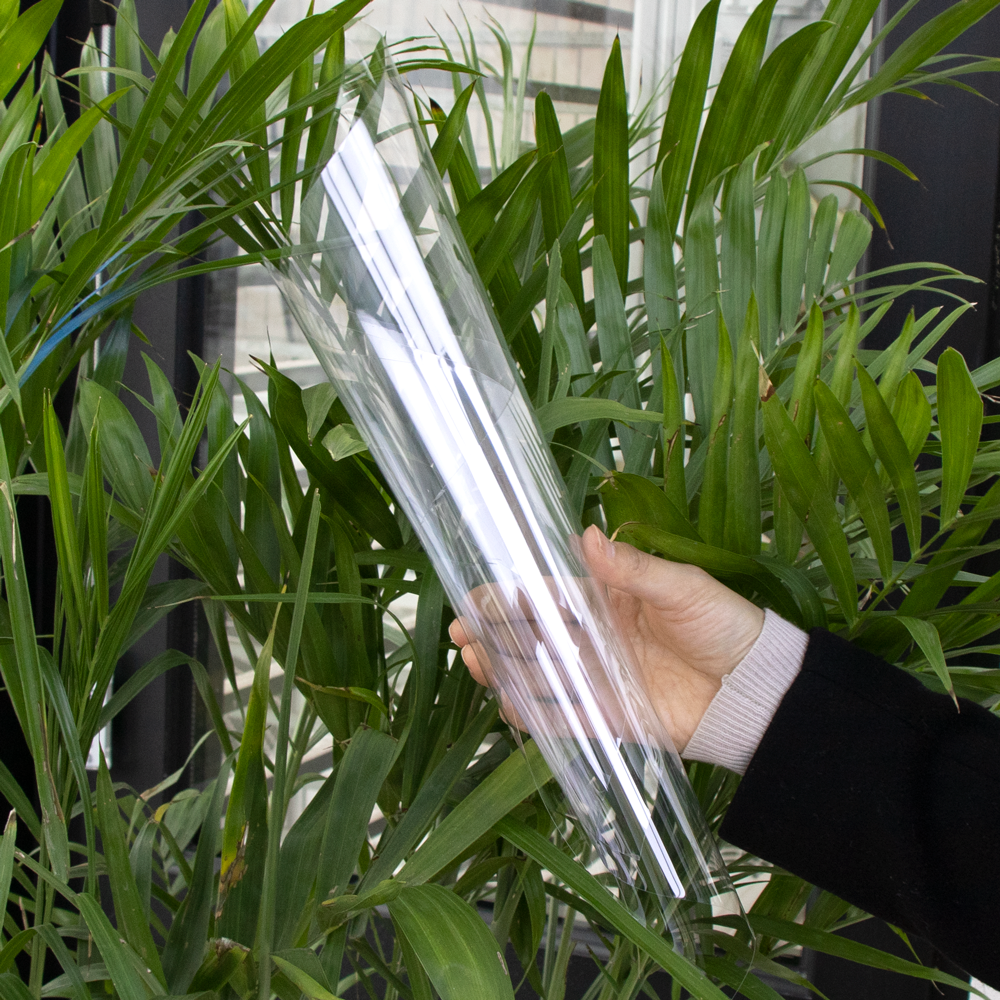
This clarity translates directly into commercial value. For point-of-purchase displays, retail packaging, and product demonstration units, you need materials that showcase the product inside without distortion. PETG achieves this with minimal haze and excellent color neutrality. The material also accepts printing exceptionally well, so you can add graphics, logos, or instructional text without compromising optical performance. When you choose petg film for packaging applications, you gain the dual benefit of crystal clarity and reliable printability that keeps your branding sharp.
PVC Haze and Light Diffusion
Rigid PVC offers a different optical profile that suits specific applications. Light transmission for rigid PVC measures between 80-83% under ASTM D1003 testing. This lower percentage means you will see noticeable haze compared to PETG, especially in thicker sheets. The material scatters light rather than transmitting it cleanly, which creates a softer, diffused appearance.
This characteristic works to your advantage in certain contexts. For lighting panels, diffuser screens, or privacy dividers, you want light to spread evenly rather than pass through sharply. PVC film provides this diffusion naturally without requiring additional surface treatments or coatings. You also benefit from cost savings when optical clarity is not your primary requirement. However, you should avoid PVC for applications where customers will examine the material closely, such as cosmetic packaging or premium retail displays. The visible haze will detract from the perceived quality of your product. For shrink film applications requiring clarity, PETG outperforms PVC noticeably, so consider your end-use carefully before selecting a material.
Material | Light Transmission (ASTM D1003) |
|---|---|
PETG | 88-90% |
Rigid PVC | 80-83% |
Impact and Flexibility
PETG Toughness
PETG is very tough. This makes it great for tough jobs. It can take a hard hit without cracking. That is why it works well for protective packaging and display cases. The material's structure lets its chains slide past each other when stressed. This spreads out the energy instead of focusing it on one spot. That is why PETG does so well in Izod impact tests. It beats rigid PVC by a big margin.
This toughness helps in real life. If you drop a PETG container or it gets bumped in shipping, it bends and bounces back. It does not break. This flexibility also lets PETG work as a shrink film. It wraps tightly around odd shapes without tearing. For things you use over and over, like reusable store displays, PETG stays strong for thousands of uses. This durability means you replace it less often. It also cuts down on damage to your products during shipping. You can feel good about your packaging choice.
PVC Rigidity
Rigid PVC is stiff. That stiffness helps for some uses, like signs and industrial boxes. It keeps its shape well. But this same stiffness causes problems in cold weather. PVC that is not soft enough is naturally rigid. It cracks easily at low temperatures. The stiffness stops the polymer chains from bending. When the temperature drops below 0°C, the material gets very stiff and brittle. Then it cracks.
Here is how the failure happens step by step:
Rigid PVC products do not handle impacts well, especially in the cold.
Because it cannot take sudden stress, the material breaks in a brittle way.
The sheet's stiffness, plus the cold freezing the chains, directly causes the brittleness in winter.
PVC that is not soft enough is naturally rigid and cracks easily at low temperatures. The stiffness stops the polymer chains from bending, so when it gets below 0°C, the material gets very stiff and brittle, leading to cracks.
Think about this limit for outdoor use or cold shipping. Some recipes add impact modifiers to make it better, but the base rigid material is still weak. For jobs that need impact resistance in changing temperatures, PETG is stronger and more reliable. But for indoor, temperature-controlled places where stiffness matters more than impact, pvc film may work fine. Be honest about your conditions when picking a material. If you are not sure, ask your supplier to test it in cold temperatures.
Heat and Dimensional Stability
PVC Heat Deflection
Heat deflection temperature (HDT) tells you how a material acts under weight when it gets hot. This number matters more than melting point for design work. You need to know when a sheet will start to bend, not when it melts. Under ASTM D648 at 264 psi, PETG bends at 158°F (70°C). Rigid PVC bends at 140°F (60°C) under the same test setup. That 18°F gap looks small, but it changes what you can use the material for.
Material | Heat Deflection Temp (ASTM D648, 264 psi) |
|---|---|
PETG | 158°F (70°C) |
PVC | 140°F (60°C) |
PVC has low heat tolerance at 140°F (60°C), the lowest on this list, per ASTM D648.
The weight you put on the material also changes the numbers. PVC shows 75°C bending at 0.45 MPa load. Raise that load to 1.8 MPa, and the bending temperature drops to 54°C. You must match the test conditions to your real-world use. A display case near a hot window or a shipping container in summer heat could push PVC past its limit. PETG keeps its shape better in these warm places.
PETG Low Shrinkage
Shrinkage control sets PETG apart from PVC during thermoforming. PETG shrinks between 0.2% and 0.5% during the forming process. Rigid PVC shrinks between 0.4% and 0.7%, with some flame-retardant grades reaching 1.0%. This gap becomes key when you form precise parts with tight tolerances.
Material | Shrinkage Range |
|---|---|
PETG | 0.2% – 0.5% |
PVC | 0.4% – 0.7% (up to 1.0% for some FR grades) |
Lower shrinkage means your thermoforming process makes consistent parts. You avoid warping and size changes across large production runs. This consistency matters for medical device trays, electronic components, and retail packaging where every millimeter counts. PETG film also works well as shrink film, wrapping tightly around products without extra material waste. PVC film works for simpler shapes, but you must plan for higher variability. When you plan a thermoforming project, ask your supplier for shrinkage data. Run test parts before starting full production. The material you pick directly affects your yield rates and final product quality.
Chemical and Water Resistance
PVC Chemical Resistance
PVC is the go-to material for tough chemical jobs. You will see it in industrial scrubbers, chemical tanks, and medical equipment covers. It resists weak acids, bases, and salts at room temperature without breaking down. This wide range makes PVC the top pick when your work involves regular contact with harsh chemicals.
But you need to know its limits. PVC breaks down when it touches oxidizers and hydrocarbons. Ketones and chlorinated solvents make it crack. Its resistance also drops a lot above 60°C. You should check your specific chemicals against a full compatibility chart before choosing PVC. For very strong chemicals, you may need a different material.
Chemical Category | Resistance Status |
|---|---|
Weak acids | Resistant at room temperature |
Bases | Resistant at room temperature |
Salts | Resistant at room temperature |
Oxidizers | Not resistant (breaks down) |
Hydrocarbons | Not resistant (breaks down) |
Ketones | Not resistant (cracks) |
Chlorinated solvents | Not resistant (cracks) |
PETG Water Sensitivity
PETG handles water well. It works in damp places and areas that get washed down. You can use PETG sheets in food processing areas or humid storage without worrying about water damage. The material keeps its strength even after long contact with water.
The real problem is with solvents. Chemicals can make PETG swell and soften. They can also cause stress cracks when the part is under load. This mix is dangerous for parts that carry weight.
Chemicals can cause swelling/softening and can also cause stress cracks, especially when the part is under load.
You should avoid these solvents when using PETG:
Acetone
Methyl ethyl ketone (MEK)
Toluene
For packaging, this solvent issue rarely causes trouble. PETG shrink film works well in normal shipping conditions. You only need to be careful if your product has solvent-based parts or if cleaning agents might touch the material. In those cases, test PETG samples under your real conditions before full production. Your supplier can help with chemical testing steps.
Environmental and Recycling Impact
PETG Recyclability
PETG has recycling code #7, which puts it in the “other” group, not the common #1 (PET) or #2 (HDPE). This means fewer city programs take PETG sheets at the curb, so you need to find special recyclers that handle mixed plastics. Even so, PETG has real recycling benefits. The material contains no chlorine, so processing it does not release dangerous gases. Making PETG also creates less toxic waste than making PVC. For your packaging work, this cleaner life cycle supports your green goals. PETG shrink film also works well in recycling centers that accept it, cutting down waste during production.
PVC Chlorine Concerns
PVC has big environmental and rule issues because of its chlorine content. Recycling becomes hard, and disposal needs careful handling. Thermal breakdown starts at 135°C, releasing hydrogen chloride gas. This reaction speeds up the breakdown and creates dangerous byproducts.
The breakdown follows a dangerous sequence:
At 135°C, PVC starts to release hydrogen chloride.
At 200°C with oxygen, the released HCl speeds up breakdown almost all the way.
Conjugated double bonds form and attack other compounds, making organochlorine substances.
Burning PVC creates dioxins and furans, which need advanced filters and a special two-step heat process.
Burning PVC can release toxic gases like dioxins and hydrogen chloride. These need advanced filters to stop environmental harm. So energy recovery is usually a last choice for PVC disposal.
These environmental worries push 2026 rules toward tighter PVC limits in packaging. You should check your long-term compliance plan carefully. PVC still costs less today, but its environmental footprint may cause future problems. For jobs where you need shrink film performance without chlorine issues, PETG gives a cleaner option. Your supplier should give you papers on where materials come from and how to dispose of them to support your environmental compliance work.
Cost and Supplier Availability
PVC Cost Advantage
Raw material pricing gives polyvinyl chloride a clear edge. PVC typically costs 20-30% less than PETG. This gap matters when you order large quantities. A packaging line running thousands of units per day accumulates significant savings. You can reinvest those savings into better equipment or marketing.
The cost difference extends beyond the raw sheet. PVC's lower price point also reduces your total landed cost. Shipping, warehousing, and inventory carrying costs all scale with material value. For budget-conscious projects, this advantage proves decisive. You can allocate funds toward other critical areas like custom tooling or faster delivery.
However, you must weigh this savings against performance requirements. A cheaper material that fails in the field costs more than a premium option that works. Calculate your total cost of ownership, not just the purchase price. Include scrap rates, rework labor, and warranty claims in your analysis.
Choosing a PVC Sheet Supplier
Your pvc sheet supplier selection directly impacts your project's success. Start by evaluating lead times. A supplier with reliable delivery schedules keeps your production running smoothly. Ask about their inventory levels and reorder triggers. Custom cutting capabilities also matter. A supplier who can cut sheets to your exact dimensions reduces your in-house processing time.
Environmental compliance certifications should guide your decision. These credentials prove a supplier meets regulatory standards.
Certification | Description |
|---|---|
SGS Testing Report | Independent lab proof of chemical makeup, showing purity levels. |
UL Certification | Checks safety items like fire resistance, electrical insulation, and heat performance. |
ISO 14001 | Shows a working system that cuts waste and energy use. |
REACH SVHC Report | Confirms no dangerous substances above the 0.1% limit. |
RoHS Compliance | Verifies limits on hazardous materials in electronic parts. |
Different jobs need different compliance rules. Match your supplier's certifications to your industry needs.
Compliance Standard | Target Application | Key Substance Restrictions | Compliant Raw Material Solution |
|---|---|---|---|
REACH & RoHS | General Industrial, Electronics | Phthalates (DEHP, DBP), Lead/Cadmium | Bio-based non-phthalate plasticizers (e.g., DOTP, DINCH) and calcium-zinc or organic-based stabilizers |
FDA 21 CFR | Food Packaging, Medical Tubing | Residual vinyl chloride monomer (VCM), leachable additives | Certified low-extractable virgin PVC resin |
NSF/ANSI 61 | Potable Water Pipes & Fittings | VOC leaching, heavy metals | Certified lead-free rigid PVC compounding |
For building jobs, check that your supplier holds the right certifications. For shrink film work, confirm their material meets your exact performance needs. A supplier who shares documents early saves you time during checks. Ask for samples and test them in your real conditions. Compare total landed costs from several suppliers before you decide.
2026 Application Trends
For 2026, some materials are better than others for certain jobs. Your choice of PETG or PVC depends on where you will use it and what rules you must follow. Knowing these trends helps you pick the right material before you start making products.
Retail and Signage
Retail displays need to be clear, strong, and look good. PETG is the top choice for clear, strong packaging that can take hits. You can find PETG in point-of-purchase displays, shelf talkers, countertop fixtures, and hanging signs. The material works very well with screen printing and digital printing, giving you clear branding on every piece. Because it prints well, it is a top choice for promotional materials that need updates often.
PETG also keeps its shape after thermoforming, surviving daily store wear better than acrylic. The material forms at the lowest temperature of common clear plastic sheets, around 250-320°F, which lets you make curved displays and blister packs without drying first. This low temperature saves energy and speeds up your production. For shrink film, PETG wraps tightly around products while staying clear, so the product stays the main focus.
PVC is still used in cheap, stiff displays. You might pick pvc film for simple shelf dividers or industrial signs where clear looks are not important. The material's stiffness works well for flat panels and support parts. But you lose the visual appeal that PETG gives. In high-end stores, the clarity difference is easy for customers to see.
Medical and Industrial
Medical packaging is moving more toward PETG for sterile barrier packaging. The material's clearness lets healthcare workers check the contents without opening the package. Its low shrinkage gives exact thermoforming for device trays and tool holders. You also get a benefit from PETG's ability to work with ethylene oxide (EtO) sterilization, the most common method for medical devices.
Sterilization Method | PETG Compatibility |
|---|---|
Gamma Radiation | Excellent |
Ethylene Oxide (EtO) | Excellent |
Steam/Autoclave | Good (with proper drying) |
Dry Heat | Not recommended |
Note that gamma radiation can make some PETG grades turn yellow or become brittle, so check your specific formula. The healthcare sector in Europe, especially the U.K. and France, leads in using PETG because of environmental rules that prefer eco-friendly options. Hospitals are more and more looking for recyclable and bio-based PETG types to lower their environmental impact.
PVC is still needed for chemical-resistant tubes and containers in industrial settings. You will find pvc used in chemical transfer lines, lab fittings, and wastewater parts. The material's ability to resist acids, bases, and salts makes it the only choice for these uses. Industrial buyers also like PVC's lower cost for high-volume parts.
The packaging industry in North America is the top user of PETG, pushed by customer demand for sustainable, recyclable materials. Car makers in Germany use PETG for interior trims and lighting parts, where lighter parts improve fuel efficiency. These uses of petg keep growing as rules get stricter.
Your packaging choices for 2026 depend on balancing performance, cost, and environmental and rule concerns. PETG works well for regulated industries like medical and food packaging. PVC is still a good choice for industrial uses where chemical resistance matters more than sustainability. Check your specific needs against these trends before picking your material.
Decision Guide for Buyers
Key Selection Criteria
The choice between PVC and PETG depends on what you need. Pick PVC when you want chemical resistance and lower cost. Pick PETG when you need better clarity, shape stability, and toughness. You should also think about total landed cost, not just the price per unit. This total includes making costs, shipping, import taxes, insurance, and changes during use. Each part changes based on your supplier, where they ship from, and how they move goods.
Here is a real example. Supplier A charged $0.48 per unit but added $0.147 for freight per box. That made the total landed cost $0.627. Supplier B charged $0.49 per unit but packed better. They fit 39,600 boxes per container instead of 34,000. That cut freight to $0.126 per box and total landed cost to $0.616. A one-cent price gap can be wiped out by a two-cent freight gap. How well you pack a container matters a lot when you source materials.
Watch for costs that hide. Common missed costs include poor container packing, surprise tariffs, design changes, reprints from quality problems, extra samples, and rework costs. Some sheets face anti-dumping taxes up to 164.75% under certain tariff rules. Ignoring these risks can cost you far more than the listed price.
When you weigh the pros and cons of petg versus the pros and cons of pvc, think about your own needs. PETG gives better strength and durability for thermoforming jobs. PETG film works well for shrink film where clarity and shape stability matter. PVC film fits uses where chemical resistance beats optical quality. Your plastic packaging choices should match your performance needs. The thermoforming process for PETG gives lower shrinkage rates, so it works great for precise parts. Knowing the pros and cons of petg helps you check supplier claims. PVC needs more care during thermoforming because its shrinkage varies more.
Supplier Evaluation Checklist
Ask your pvc sheet supplier for current technical data sheets and test reports. Check certifications like SGS, RoHS, TUV Austria, or OWS for the exact film grade. Request batch specs, tolerance data, and production lead times. Review pilot acceptance rules and operator training records to make sure supplier claims match real process controls.
For shrinkage testing, ask your supplier for results using known standards. ISO 294-4 measures linear shrinkage by comparing mold size to part size after 24 hours. ASTM D955 is a main standard for shrinkage measurement. ISO 2577 gives rules for finding linear shrinkage values for the material and other options. ISO 294-3 covers post-mold shrinkage checks, keeping test conditions steady like temperature, pressure, and cooling time. These standards help you verify how your chosen material behaves during thermoforming.
For recyclability checks, confirm material identification and end-of-life info for each sales region. The applications of petg in regulated industries need proof of environmental claims. Your supplier should show that the claim comes from process controls, not just marketing talk.
When you source plastic packaging, look at shrink film options closely. Test samples under your real conditions. Run forming trials with your own equipment. Check impact resistance at the temperatures your products will face during shipping and storage. Compare total landed costs from several suppliers before you decide. A full check now stops costly surprises later.
Why choose HSQY as your petg/pvc supplier
HSQY Plastic Group meets these exacting standards with ISO 9001:2008 certified manufacturing, SGS-audited facilities, and products compliant with RoHS and REACH regulations. All materials are tested in our in-house laboratory before shipment.
With 20+ years of industry experience, we operate more than 12 affiliated plants with 10+ PVC production lines (daily capacity: 120 tons), 4 PET blister lines (daily capacity: 55 tons), and 12+ flexible PVC film lines (daily output: 120 tons). Our 15,000+ m² facility runs 12+ production lines with 3 slitting machines.
We provide full technical data sheets, batch specifications, tolerance data, and certified test reports (SGS, RoHS, REACH). Our engineering team supports shrinkage testing per ISO 294-4, ASTM D955, ISO 2577, and ISO 294-3 standards.
PVC offers chemical resistance and lower cost. PETG offers impact strength and clarity. Contact your pvc sheet supplier for samples. Plastic packaging for 2026 applications favors this material for environmental reasons. The former remains viable for industrial uses. Test thermoforming and shrink film. Use proper thermoforming for your plastic packaging. Choose suitable shrink film for your packaging.
FAQ
How do I test which material works for my application?
Ask your supplier for samples and test them on your own machines. Check how well the material handles impacts at the temperatures your products will see during shipping. Compare shrinkage rates using ASTM D955 standards. Your plastic packaging choice should be based on how the material performs in real life, not just on paper.
What certifications should I verify before ordering?
Look for SGS testing reports, UL certification, and REACH compliance documents. For food or medical uses, make sure the material meets FDA 21 CFR rules. Ask your supplier for technical data sheets that match your specific batch. These papers prove the material is pure and follows regulations before you place big orders.
Can I switch between PVC and PETG without changing my process?
No, you will need to make some changes. PETG needs lower thermoforming temperatures and controls shrinkage better. PVC requires different heating profiles and may crack when processed in cold conditions. Your shrink film line may need new tooling or temperature settings. Test both materials fully before you switch production.


Recent News
1.Why Choose PET Sheets for Thermoforming from HSQY
2026-08-252.Where Can I Find Transparent PVC Sheets? A Complete Sourcing Guide for 2026
2026-08-203.Top 10 PVC Sheet Suppliers for Wholesale and Custom Cutting in the USA
2026-08-054.Why Our PET Sheets Maintain Optical Performance Batch After Batch
2026-07-31